There comes a time in every person's life when they encounter a magnifying mirror in a hotel bathroom and experience what can only be described as a crisis of pore-related proportions. One moment you're a reasonably attractive human being; the next, you're staring at what appears to be a topographical map of the lunar surface, except the moon never had to deal with foundation residue and sunscreen buildup.
The average human face contains roughly twenty thousand pores. Twenty thousand. That's more than the population of some perfectly respectable English market towns. And every single one of them is quietly filling up with a cocktail of sebum, dead skin cells, and the ghostly remains of yesterday's makeup — while you stand there with your foaming cleanser, convinced you're doing enough.
You're not. And that's perfectly fine, because deep facial cleansing exists precisely for the gap between what you can do and what your skin actually needs. Let's talk about that gap. It's wider than you think.
The Charming Delusion of the Home Routine
You have a system. Morning cleanser, evening micellar water, weekly mask, possibly a serum if you're the sort who reads ingredient lists for entertainment. And yet — every morning, the same landscape greets you. A gentle oil slick across the nose, pores that seem to have their own postcode, and the occasional spot that materialises with the dramatic timing of a villain in a period drama.
The issue isn't effort. The issue is depth. Home care cleans the surface, which is rather like tidying the entrance hall while the rest of the house descends into chaos. Imagine your pore as a tiny well. You're polishing the rim. Meanwhile, at the bottom, a dense mixture of oxidised sebum, dead cells, and microscopic debris has been accumulating since roughly last autumn. This mixture hardens, darkens, and eventually announces itself as blackheads — those charming little dots that make your nose look as though a swarm of punctuation marks has landed on it — or as inflamed spots that arrive with the subtlety of a brass band.
Professional pore cleansing reaches what your cotton pad cannot. Not because you're incompetent, but because you lack the tools, the magnification, and the dispassionate honesty of someone who looks at skin all day without taking it personally.
What's Actually Happening Beneath the Surface
Skin is an organ. The largest organ of the human body, a fact most people acknowledge with the same enthusiasm they reserve for reading terms and conditions. Cells are born, live their brief lives, and die. The trouble begins when dead cells don't shed on schedule.
Deep skin purification starts where your bathroom routine ends. A professional analysis under a Wood's lamp reveals what the naked eye misses: dehydration masquerading as oiliness, early pigmentation, bacterial colonies setting up residence in your pores like unwelcome tenants who never signed a lease.
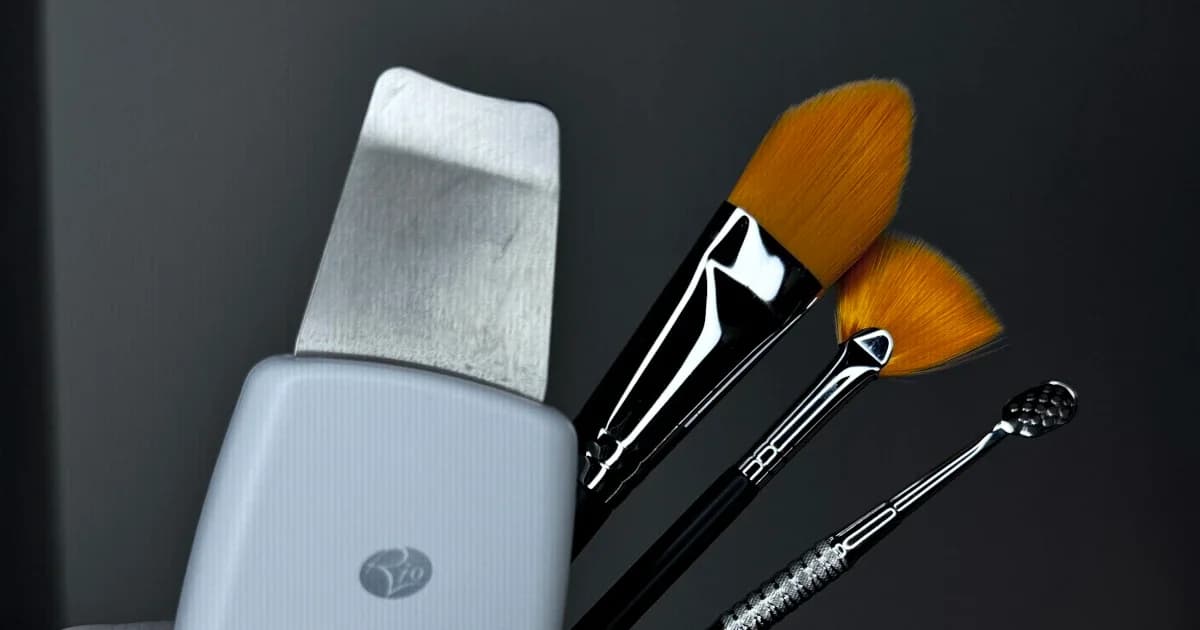
The facial extraction treatment itself is a sequence. First, softening — steam or enzymatic preparation to coax pores open. Then extraction, manual or instrument-assisted. Yes, it is exactly as satisfying as it sounds, except it's performed by someone who knows precisely where to press and how firmly, so you don't end up with the scarring that typically follows a DIY bathroom extraction conducted with two fingernails and a prayer.
After extraction comes recovery — calming masks, targeted serums, LED therapy if needed. Skin leaves the treatment room looking renewed. Not reborn — that would be unsettling — but with a clarity you probably haven't seen since before you discovered the existence of primer.
Why a Treatment Room, Not a Bathroom
Professional care has one advantage that no product can replicate: objectivity. You see your face every day, which means gradual deterioration becomes invisible. A cosmetologist sees your skin with fresh eyes and the accumulated knowledge of having examined thousands of faces. She knows that the recurring spot on your chin isn't random — it's the consequence of resting your face on your hand during every video call since the pandemic.
A deep facial cleansing in a professional setting is tailored to your specific skin type. Oily skin with congested pores needs a fundamentally different approach than sensitive skin prone to redness. The universal solution doesn't exist — which is precisely why that cleanser promising "invisible pores" can't deliver. Not because it's bad, but because it doesn't know who it's talking to.
Consistency matters. One treatment is like one trip to the gym — you feel marvellous, but a six-pack it does not produce. A clear skin routine is a system, not a single heroic gesture.
Frequently Asked Questions
Does deep facial cleansing hurt?
Let's say it's not a day spa in Bali. During extraction, you'll feel pressure — occasionally uncomfortable, never agonising. Most clients describe it as "a bit unpleasant, but worth it." The cosmetologist adjusts intensity to your tolerance. Afterwards, skin looks slightly flushed, as though you've been for a brisk walk in cold air rather than twelve rounds with a heavyweight boxer.
How often should I go?
It depends on skin type. Oily and problem-prone skin benefits from sessions every four to six weeks. Normal and dry skin manages well with six to eight week intervals. Your cosmetologist will create a plan during the first consultation — because your skin deserves bespoke advice, not a generic recommendation from the internet.
Can I do a deep cleanse at home?
Technically, yes. Technically, you can also perform your own dental work. The question is whether the outcome will be worth the effort. Home extraction without sterile instruments and proper technique leads to scarring, redness, and the enthusiastic redistribution of bacteria. Professional pore cleansing uses equipment and products that aren't available over the counter for very good reasons.
What should I do after the treatment?
Be gentle with your skin for two days. No makeup on day one, no sauna, no direct sun without SPF. Skin after a deep cleanse is like a freshly painted room — it needs time to settle. Follow your cosmetologist's instructions, and your reward will be skin you actually want to examine in that magnifying mirror.
In Closing
Your pores won't thank you — they lack the anatomy for gratitude. But your mirror will. Deep facial cleansing isn't surgery, it isn't a miracle, and it certainly isn't vanity. It's the sensible step that separates "reasonably decent skin" from "skin you're genuinely pleased to see in the morning."
If you're in Pilsen and your skin has been dropping hints — or, more accurately, staging a full protest — Viktorie would be delighted to show you what professional care looks like. Book a consultation. Let your face be handled by someone who knows what they're doing. Unlike you, who mostly just squeezes things and hopes for the best.